Building Streets for a Resilient Future

Editors of Issue 51.3 - John L. Renne, Billy Fields, & Nacima Baron - on the importance of Building Resilient Streets and what is at stake for the future.
Streets are the most extensive public spaces in cities. They are not only conduits for people and goods but also surfaces that can manage the extent of stormwater, heat, and carbon emissions. For much of the last century, design priorities were dominated by a single metric: the speed and volume of motor vehicles. The concept of resilient streets challenges this paradigm. It reframes the street as multifunctional urban systems that integrate mobility, ecology, and social life. Success is measured not only by traffic flow but also by safer speeds, reduced heat and stormwater runoff, improved access to services, and better quality of life.
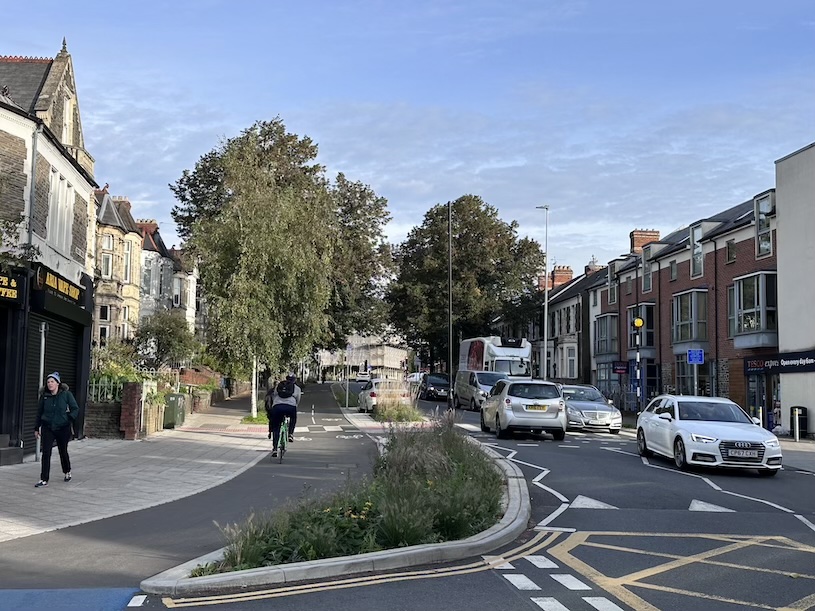
This special issue of Built Environment ,“Building Resilient Streets,” assembles scholarship from across the globe to demonstrate how resilience can be embedded into everyday street design. These contributions show that resilient streets are not abstract concepts. They are already being tested, adapted, and scaled in diverse contexts. By examining how cities are aligning green infrastructure, safe mobility, and social needs, the articles offer practical guidance for those who plan, design, and maintain the streets we all use.
The issue features a wide range of perspectives, from design interventions to policy frameworks. Highlights include examinations of:
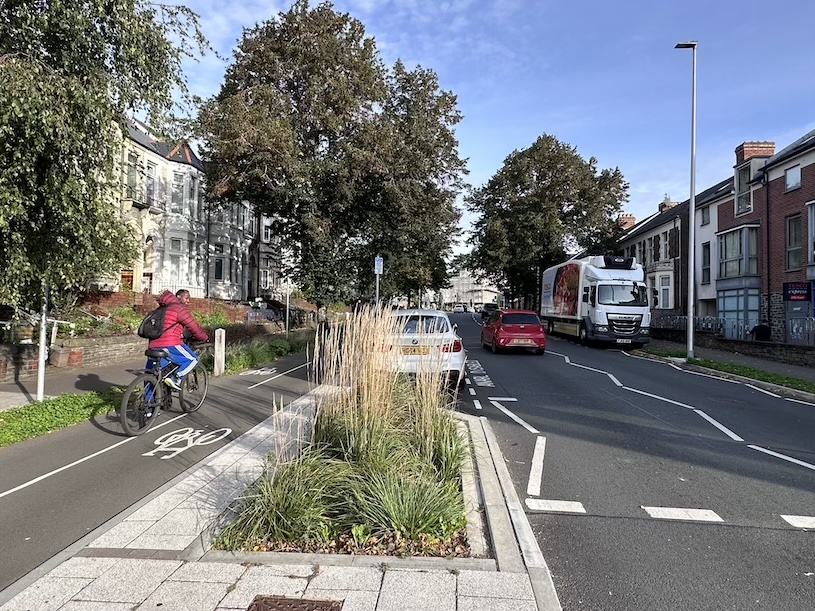
• Integrating Green Infrastructure at the Curb: While curb extensions and bioswales can reduce runoff and cool neighborhoods, bureaucratic systems are difficult to dislodge .
• Designing for Safer Speeds: Strategies like raised intersections, narrowed lanes, and continuous sidewalks and lowering speed limits can help to build safer streets, but are often seen as new, unproven technologies that are only slowly being integrated into status quo practice.
• Transit Stops as Microclimates: For transit to be effective in increasingly hot climates, transit hubs must be shaded, ventilated hubs that create waiting areas that are comfortable and dignified public spaces.
• Equity and Everyday Mobility: Resilient street design are a form of social policy that must ensure access to work, school, and services during both everyday travel and during extreme events like storms.
• Scaling Tactical Urbanism: Results from temporary plazas, protected lanes, and pocket parks show how pilots can be transformed into long-term project typologies that can be used across neighborhoods.
• Global Lessons: Implementing resilient streets in different regions and income levels is a challenge but common street design principles can be adapted and used in different ways depending on the context.
Moving from Vision to Practice
A central theme running through the issue is the need for coalitions that cut across transportation, water management, public health, and community development. Many cities already have isolated efforts around complete streets, safe routes to school, or green infrastructure. The challenge is weaving these into routine practice by aligning capital plans, design standards, maintenance cycles, and budgets so that resilience is no longer the exception but the rule.
The collected papers also remind us that resilience is not only about responding to major events. In many parts of the world, it is about whether people can get to school, work, or the market on a rainy day. Small interventions like raised crossings, continuous sidewalks, or shaded waiting areas can make the difference between mobility and isolation. These everyday investments, when planned with community input, create streets that serve both immediate needs and long-term climate goals.
Taken together, the articles in this issue underscore the potential of resilient streets to foster healthier, safer, and more connected communities. They show how ecological design, speed management, and cross-sector collaboration can make streets more than traffic corridors. They become places where people linger, interact, and thrive. By bringing together examples across climates and cultures, the special issue offers a platform for learning and adaptation.
Resilient streets are achievable, affordable, and important for larger climate goals. They require coalition building and clear measures of success. As the research and case studies in this issue demonstrate, the path forward is already being charted block by block and city by city.
________________________________________________________________
As ever we welcome further Built Environment blogs & tweets on this theme!
Listing Image/Images: Resilient Streets in Cardiff (© author. All rights reserved)