Example Issue 2
About this issue
Summary
Example Issue 1
About this issue
Summary
per suscipit lobortis nisl ut aliquip ex ea commodo consequat. Duis autem vel eum iriure dolor in hendrerit in vulputate velit esse molestie consequat, vel illum dolore eu feugiat nulla facilisis at vero eros et accumsan et iusto odio dignissim qui blandit praesent luptatum zzril delenit augue duis dolore te feugait nulla facilisi. Nam liber tempor cum soluta nobis eleifend option congue nihil imperdiet doming id quod mazim placerat facer possim assum. Typi non habent claritatem insitam; est usus legentis in iis qui facit eorum claritatem. Investigationes demonstraverunt lectores legere me lius quod ii legunt saepius. Claritas est etiam processus dynamicus, qui sequitur mutationem consuetudium lectorum. Mirum est notare quam littera gothica, quam nunc puta

Garden Suburbs of Tomorrow

Now available in paperback with a special discount.
Faced with acute housing shortages, the idea of new garden cities and suburbs is on the UK planning agenda once again, but what of the garden suburbs that already exist?
Over the first six decades of the twentieth century, councils across Britain created a new and optimistic form of housing – the cottage estates of ‘corporation suburbia’. By the early 1960s these estates provided homes with gardens for some 3 million mainly working-class households. It was a mammoth achievement. But, because of what then happened to council housing over the later years of the century, this is not very often appreciated.
In Garden Suburbs of Tomorrow? Martin Crookston suggests that making the most of the assets which this housing offers is a positive story – it can be positive for housing policy; for councils and their ‘place-making’ endeavours; and for the residents of the estates. This is especially important when all housing market and development options are so constrained, and likely to remain so for the next decade or more.
Following an examination of what the estates of ‘corporation suburbia’ are and what they are like, there follow chapters on specific examples from different parts of the country, on how they are affected by the workings of the housing market, and then – not unconnectedly – on how attitudes to this socially-built stock have evolved. Then the final chapters try to draw out the potentials, and to suggest what future we might look for in corporation suburbia in the twenty-first century.
Martin Crookston is an independent strategic planning consultant. Recent assignments have focused on housing market renewal in the North and Midlands, on London’s Olympic ‘Legacy’ plans, and on urban strategy in the UAE. He was a member of the Urban Task Force, and is a Trustee of the CPRE and a Board Member of Architecture and Design Scotland.
Contents
- Foreword by Sir Peter Hall
- Chapter 1 Introduction
- Chapter 2 The Cottage Estates and Their Successors
- Chapter 3 Two London Estates
- Chapter 4 In the North East Chapter 5 Radburnland: The Later Post-War Suburbs
- Chapter 6 Threads
- Chapter 7 Market Patterns and Roles
- Chapter 8 Attitudes
- Chapter 9 Potentials: A Lazy Housing Asset
- Chapter 10 A Lazy Economic Asset
- Chapter 11 An Untapped Land/Development Asset?
- Chapter 12 Are We Missing on Community Assets?
- Chapter 13 The Potentials, and Things We Might Do
- Chapter 14 The Corporation Suburbs in the Twenty-First Century
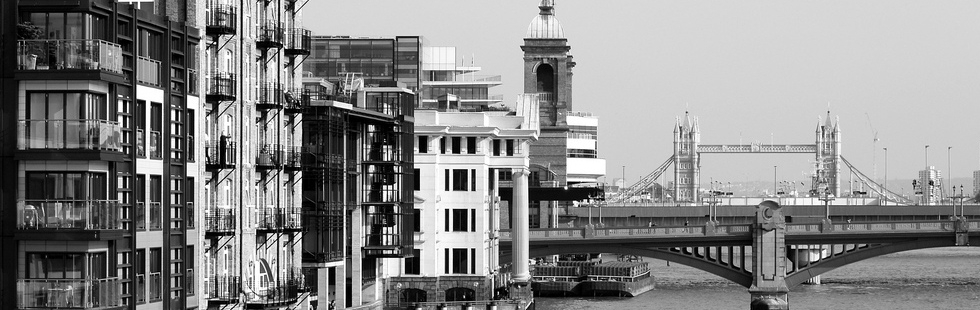
The Planning Imagination
Peter Hall and the Study of Urban and Regional Planning

Knighted in 1998 ‘for services to the Town and Country Planning Association’, and in 2003 named by Her Majesty Queen Elizabeth II as a ‘Pioneer in the Life of the Nation’, Peter Hall is internationally renowned for the breadth and depth of his studies and writings on urban and regional planning. For the last 50 years, he has captured and helped to create the ‘planning imagination’.
Here the editors have brought together in five themes a series of critical reflections on Peter’s vast and diverse contributions. Those reflections are provided by colleagues familiar with his work.
The five parts are devoted to Peter Hall’s breadth of academic work, covering the history of cities and planning, London, spatial planning, connectivity and mobility, and urban globalization. Finally, as a sixth part, the editors have asked Peter Hall himself to reflect on his career and the sources of his imagination.
The story this book tells is not one of a singular, totally consistent theoretical and philosophical view elaborated over several decades. Rather it covers a set of views that necessarily admits signs of Peter’s inconsistency and imperfection over the years – the insights and imperfections that inevitably accompany the exercise of a nonetheless remarkably fertile, restless and inspiring planning imagination.
Editors are:
Mark Tewdwr-Jones is Professor of Town Planning at Newcastle University
Nicholas A. Phelps is Professor of Urban and Regional Development at University College London
Robert Freestone is Professor of Planning at the University of New South Wales
Contents
- Foreword. 1. Geography, History and the Planning Imagination
- Part One: History of Cities and Planning. 2. Urban and Regional Planning. 3. Great Planning Disasters. 4. Cities of Tomorrow. 5. Cities in Civilization
- Part Two: London’s Growth and Development. 6. London’s Economy: From Resurgence to Recession to Rebalancing. 7. London 200 and 2001. 8. Working Capital
- Part Three: Spatial Planning. 9. Regional Planning. 10. The Containment of Urban England. 11. Sociable Cities. 12. Regeneration: The Inner City in Context. 13. Non-Plan
- Part Four: Connectivity and Mobility. 14. The Information Age and Technological Change. 15. Technopoles of the World. 16. Transport and Planning
- Part Five: Globalized Urbanization. 17. The World Cities. 18. The Polycentric Vision. 19. Europe 2000: A Pioneering Work. 20. Urban Futures
- Part Six: A Unique Combination of Ideas. 21. Apologia pro Vita Sua
- Peter Hall Bibliography
September 2013 - 328 pages
Hardback; 0978-415-50607-6 - £105.00
Paperback: 0978-415-50608-3 - £34.99

High-Speed Rail: Shrinking Spaces, Shaping Places
This special issue offers a unique expert view of the current HSR debate across the UK, Europe and the wider world. It offers a new and expert perspective on two central questions: the need to reconcile the huge scale of investment with public and political acceptability, and the challenge of maximising social value from that investment. Anyone involved in the debate will find it essential reading.
About this issue
Summary
This special issue offers a unique expert view of the current HSR debate across the UK, Europe and the wider world.

HIGH-SPEED RAIL (HSR) has become the truly significant twenty-first century land transport mode, as networks extend and connect across the world – principally in Europe and Asia, and above all in China. There is even the prospect of HSR (perhaps, belatedly) in California. But this has been accompanied by passionate controversy. In 2010, on 1 October, an estimated 100,000 people took part in a demonstration against the Stuttgart 21 project to build a new high-speed link under Stuttgart’s historic train station. Repeated legal challenges have held up the start of construction on California’s planned $68 billion high-speed line connecting San Francisco and Los Angeles. And in the United Kingdom, there is vocal opposition to the proposed High Speed 2 line from London to Manchester and Leeds, the estimated cost of which has already risen from £33 billion (2010) to £42 billion (2013), before construction has even started.
Underlying these debates are difficult issues of planning appraisal and decision-taking. Many critics question the application of traditional cost-benefit analysis, originally devised 50 years ago to measure the benefits from new highway construction and heavily weighted in favour of time savings, to railway construction: time spent on trains, they argue, is often not time wasted but time profitably spent on work-in-transit. And arguments that high-speed lines shrink time distances, bringing peripheral economically-deprived regions to central thriving places, are controversial because ways to measure the advantages are in their infancy. The experts themselves are divided, often reaching contrary conclusions.
So the editors of Built Environment have drawn on their own research, and of their colleagues, to produce this unique collection of expert papers. David Banister and Moshe Givoni open with a deeply-researched and wide-ranging overview of current financing and trends in European rail travel, especially HSR. They show that HSR can transform the geography of a country, bringing regions and cities closer to each other by improving accessibility, and creating (regional) economic development. Two factors prove central: the number and location of stations, and their integration into the rest of the transport network. A dedicated HSR network may provide the capacity for growth in long-distance travel – but, to be successful, it needs to be planned as the strategic backbone of the wider transport system.
Peter Hall follows with a comprehensive review of the complex history of High Speed Two (HS2), the most ambitious single transport project ever att empted in the UK – and, increasingly, one of the most controversial. Critics assert that the projections of future demand are exaggerated, that additional capacity could be secured more cheaply and effectively by improvements to the existing line, and that projections of time-savings ignore the value of working time on the train. Increasingly, he shows, the economic appraisal of the scheme may turn on its indirect benefits to regional development and urban regeneration.
In turn Hall collaborates with Chia-Lin Chen to review the key policy question: how to link new high-speed rail connections to regional rail networks so as to ‘irrigate’ deprived regions around key core cities. They argue that one aspect has been ignored: how strategic regional planning could enhance the opportunities offered by HSR for urban and regional development. This has been successfully achieved in northern France; they present a parallel UK vision, S-Map 2030 North West, to extend the advantages of HS2 across the region. Their colleague Robin Hickman and other colleagues further outline this vision for the future seamless public transport journey in 2030, drawing on the SYNAPTIC project (Synergy of New Advanced Public Transport Solutions Improving Connectivity in North West Europe), funded by the EU INTERREG IVB programme. They argue the critical importance of enhancing the passenger’s journey experience, illustrated by an animated future journey from Preston (UK) to Delft (the Netherlands).
Finally, Chia-Lin Chen and Biao Wei review China’s remarkable HSR network, planned to reshape the country’s economic geography. They examine the new Hangzhou East Rail station to argue that a critical feature of the system – huge airportstyle HSR stations in the suburbs of big cities, as the basis for new town development – leads to long and indirect journeys between their central areas, bringing little advantage in journey times compared with the traditional rail system.
This special issue offers a unique expert view of the current HSR debate across the UK, Europe and the wider world. It offers a new and expert perspective on two central questions: the need to reconcile the huge scale of investment with public and political acceptability, and the challenge of maximising social value from that investment. Anyone involved in the debate will find it essential reading.

Healthy City Planning
From Neighbourhood to National Health Equity

Healthy city planning means seeking ways to eliminate the deep and persistent inequities that plague cities. Yet, as Jason Corburn
argues in this book, neither city planning nor public health is currently organized to ensure that todayʼs cities will be equitable and healthy.
Having made the case for what he calls ʻadaptive urban health justiceʼ in the opening chapter, Corburn briefly reviews the key events, actors, ideologies, institutions and policies that shaped and reshaped urban public health and planning from the nineteenth century to the present day. He uses two frames to organize this historical review: the view of the city as a field site and as a laboratory.
In the second part of the book Corburn uses in-depth case studies of health and planning activities in Rio de Janeiro, Nairobi, and
Richmond, California to explore the institutions, policies and practices that constitute healthy city planning. These case studies personify some of the characteristics of his ideal of adaptive urban health justice. Each begins with an historical review of the place, its policies and social movements around urban development and public health, and each is an example of the urban poor participating in, shaping, and being impacted by healthy city planning.
Author
Jason Corburn is an Associate Professor at the University of California, Berkeley and is jointly
appointed in the Department of City & Regional Planning and the School of Public Health.
Contents
Contents
Introduction
1. Adaptive Urban Health Justice
2. The City in the Field
3. The City as Laboratory
4. Favela Health in Rio de Janeiro, Brazil
5. Collaborative Planning in Nairobiʼs Slums
6. Planning for Environmental Health Justice in Richmond, California
7. Towards a Planet of Healthy and Equitable Cities
April 2013 - 192 pages
Hardback: 978-0-415-61301-9 - £105.00
Paperback: 978-0-415-61302-6 - £32.99
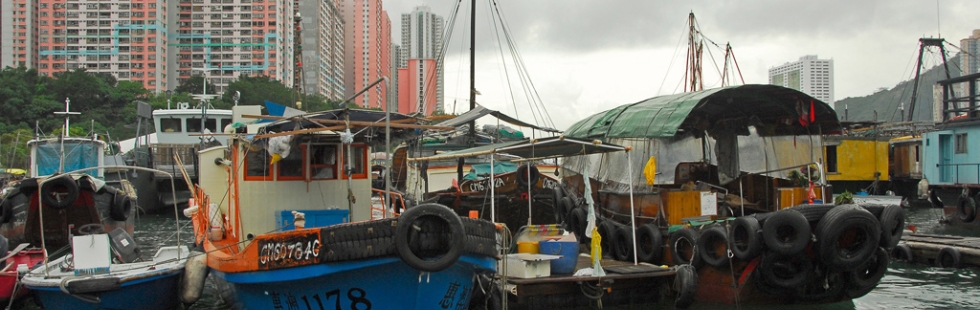
Planning Asian Cities: Risks and Resilience

In Planning Asian Cities: Risks and Resilience, Stephen Hamnett and Dean Forbes have brought together some of the region’s most distinguished urbanists to explore the planning history and recent development of Pacific Asia’s major cities.
They show how globalization, and the competition to achieve global city status, has had a profound effect on all these cities. Tokyo is an archetypal world city. Singapore, Hong Kong and Seoul have acquired world city characteristics. Taipei and Kuala Lumpur have been at the centre of expanding economies in which nationalism and global aspirations have been intertwined and expressed in the built environment. Beijing, Hong Kong and Shanghai have played key, sometimes competing, roles in China’s rapid economic growth. Bangkok’s amenity economy is currently threatened by political instability, while Jakarta and Manila are the core city-regions of less developed countries with sluggish economies and significant unrealized potential.
But how resilient are these cities to the risks that they face? How can they manage continuing pressures for development and growth while reducing their vulnerability to a range of potential crises? How well prepared are they for climate change? How can they build social capital, so important to a city’s recovery from shocks and disasters? What forms of governance and planning are appropriate for the vast mega-regions that are emerging? And, given the tradition of top-down, centralized, state-directed planning which drove the economic growth of many of these cities in the last century, what prospects are there of them becoming more inclusive and sensitive to the diverse needs of their populations and to the importance of culture, heritage and local places in creating liveable cities?
Stephen Hamnett is Emeritus Professor of urban and regional planning at the University of South Australia. He is also a Commissioner of the Environment, Resources and Development Court of South Australia.
Dean Forbes is Deputy Vice-Chancellor (International and Communities) and Vice-President at Flinders University. He is an urbanist and has published widely on developments in Pacific Asian cities.
Contents
1. Risks, Resilience and Planning in Asian Cities Stephen Hamnett and Dean Forbes
2. Uneven Geographies of Vulnerability: Tokyo in the Twenty-First Century André Sorensen
3. The Dragon’s Head: Spatial Development of Shanghai Susan Walcott
4. Beijing: Socialist Chinese Capital and New World City Gu Chaolin and Ian G. Cook
5. Taipei’s Metropolitan Development: Dynamics of Cross-Strait Political Economy, Globalization and National Identity Liling Huang and Reginald Yin-Wang Kwok
6. Seoul as a World City: The Challenge of Balanced Development Seong-Kyu Ha
7. Hong Kong: The Turning of the Dragon Head Anthony Yeh
8. Singapore: Planning for More with Less Belinda Yuen
9. Going Global: Development, Risks and Responses in Kuala Lumpur and Putrajaya Sirat Morshidi and Asyirah Abdul Rahim
10. Governing the Jakarta City-Region: History, Challenges, Risks and Strategies Wilmar Salim and Tommy Firman
11. Bangkok: New Risks, Old Resilience Douglas Webster and Chuthatip Maneepong
12. Manila: Metropolitan Vulnerability, Local Resilience Brian Roberts

Dubai: Beyond an Urban Spectacle

For many, the image of Dubai is of islands shaped like palm trees, luxurious shopping malls and the iconic building in the shape of a dhow’s sail – the Burj al Arab. In Dubai: Beyond an Urban Spectacle, Yasser Elsheshtawy reveals a very different city, a place full of aspirations, struggles, and encounters taking place in all sorts of settings. It represents, he argues, a new form of urbanity, which cannot be explored by looking only at spectacular developments. One must move into the lesser known spaces of Dubai’s traditional neighbourhoods for they constitute the essence of the city and where its unique urban experiment is played out.
Following a theoretical review setting Dubai within the current discussion about globalization, Elsheshtawy presents a photo essay, so introducing the reader to the city, its places and its people. He then explores Dubai’s history from its beginnings as a small fishing village to its place on the world stage today, using historical narratives, travel writing, personal and press accounts, and his own experiences to bring colour to his description of the city’s development. He considers the role of planning in shaping Dubai’s urban morphology and in creating a global city. Next, his attention turns to the city’s megaprojects and its spectacular – and not so spectacular – retail environment, and then to the ‘forgotten urban spaces’, the meeting and living places of the low-income migrant community. And finally he looks at the influence of ‘the Dubai model’ and its durability, both in its birth place and in those cities where it is being emulated.
Yasser Elsheshtawy is Associate Professor or Architecture at the United Arab Emirates, University, Al Ain.
Contents
Preface
1. The Emerging Urbanity of Dubai
2. Arab Cities and Globalization
3. The Other Dubai: A Photo Essay
4. The Illusive History of Dubai
5. The Transformation of Dubai or Towards the Age of Megastructures
6. Spectacular Architecture and Urbanism
7. The Spectacular and the Everyday: Dubai’s Retail Landscape
8. Transient City: Dubai’s Forgotten Urban Spaces
9. Global Dubai or Dubaization
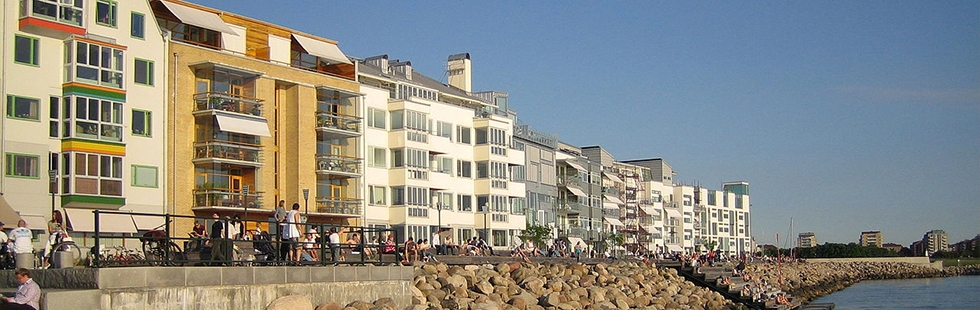
Good Cities, Better Lives: How Europe Discovered the Lost Art of Urbanism
This book has one central theme: how, in the United Kingdom, can we create better cities and towns in which to live and work and play? What can we learn from other countries, especially our near neighbours in Europe? And, in turn, can we provide lessons for other countries facing similar dilemmas?

Urban Britain is not functioning as it should. Social inequalities and regional disparities show little sign of going away. Efforts to generate growth, and spread it to the poorer areas of cities, have failed dismally. Much new urban development and redevelopment is not up to standard. Yet there are cities in mainland Europe, which have set new standards of high-quality sustainable urban development. This book looks at these best-practice examples – in Germany, the Netherlands, France and Scandinavia – and suggests ways in which the UK and other countries could do the same.
The book is in three parts. Part 1 analyses the main issues for urban planning and development – in economic development and job generation, sustainable development, housing policy, transport and development mechanisms – and probes how practice in the UK has fallen short.
Part Two embarks on a tour of best-practice cities in Europe, starting in Germany with the country’s boosting of its cities’ economies, moving to the spectacularly successful new housing developments in the Netherlands, from there to France’s integrated city transport, then to Scandinavia’s pursuit of sustainability for its cities, and finally back to Germany, to Freiburg – the city that ‘did it all’.
Part Three sums up the lessons of Part Two and sets out the key steps needed to launch a new wave of urban development and regeneration on a radically different basis.
CONTENTS
Part One: Facing the Challenges. 1. The First Challenge: Rebalancing Our Urban Economies. 2. The Second Challenge: Building New Homes. 3. The Third Challenge: Linking People and Places. 4. The Fourth Challenge: Living with Finite Resources. 5. The Fifth Challenge: Fixing Broken Machinery
Part Two: Learning from Model Cities: A Twenty-First Century Grand Tour. 6. The Sixth Challenge: Going on Tour. 7. Boosting Economic Growth in Germany. 8. Building Sustainable Suburbs in the Netherlands. 9. France Uses Transport to Develop and Regenerate Cities. 10. Conserving Resources in Scandinavia: Stockholm and Malmö. 11. Freiburg: The City That Did It All
Part Three: Lessons from Europe. 12. Learning the Lessons. Also includes bibliography, index, illustrations and maps
September 2013 - 356 pages
Hardback; 0978-415-84022-4 £105.00
Paperback: 0978-415-84021-4 - £34.99

Of Planting and Planning: The Making of British Colonial Cities

‘At the centre of the world-economy, one always finds an exceptional state, strong, aggressive and privileged, dynamic, simultaneously feared and admired.’
Fernand Braudel, Civilization and Capitalism, 15th–18th Centuries
This, surely, is an apt description of the British Empire at its zenith.
Of Planting and Planning explores how Britain used the formation of towns and cities as an instrument of colonial expansion and control throughout the Empire. Beginning with the seventeenth-century plantation of Ulster and ending with decolonization after the Second World War, Robert Home reveals how the British Empire gave rise to many of the biggest cities in the world and how colonial policy and planning had a profound impact on the form and functioning of those cities.
This second edition retains the thematic, chronological and interdisciplinary approach of the first, each chapter identifying a key element of colonial town planning. New material and illustrations have been added, incorporating the author's further research since the first edition. Most importantly, Of Planting and Planning remains the only book to cover the whole sweep of British colonial urbanism.
Robert Home is Professor of Land Management, Anglia Law School, Anglia Ruskin University.
Contents
Introduction: ‘The Chief Exporter of Municipalities’
1. The ‘Grand Modell’ of Colonial Settlement
2. ‘Planting is My Trade’: The Shapers of Colonial Urban Landscapes
3. Port Cities of the British Empire: ‘A Global Thalassocracy’
4. The ‘Warehousing’ of the Labouring Classes
5. ‘The Inconvenience felt by Europeans’: Racial Segregation, Its Rise and Fall
6. ‘Miracle-Worker to the People’: The Idea of Town Planning, 1910–1935
7. ‘This Novel Legislation’: Institutionalizing Town Planning, 1900–1950
8. ‘What Kind of Country Do You Want?’ The Transition to Independence
Conclusions: The Legacy of Colonial Town Planning
Also includes glossary, bibliography and index