crime, safety, urban
Crime in the City
About this issue
Issue number
For more info download the flyer
Format: PDF 207940KB
Summary

08 Apr 2014
This issue focuses on crime in the city with particular reference to the relationship between crime, land use and the urban environment. In their papers, the editor and contributors discuss different aspects of crime risk, crime opportunities, crime prevention and fear of crime.
Following Alex Hirschfield’s scene-setting paper, Danielle Reynald et al. examine the importance of social distance as a barrier to offender movements. Shane D. Johnson et al. take a closer look at crime hotspots and how far they represent stable patterns of crime. Jennifer B. Robinson describes the impact of a major regeneration programme on crime patterns in a North American city. J. Bryan Kinney et al. explore the relationship between urban land use and crime in Vancouver, while Tinus Kruger and Karina Landman investigate how far theories of environmental criminology and situational crime prevention apply outside the West by focusing on gated communities and crime reduction in urban South Africa. Andrew Newton moves away from a concern with crime affecting fixed locations by considering the special factors that apply when measuring and tackling crime on public transport. Finally, Hirschfield and Newton investigate the relationship between burglary and burglary reduction measures in Manchester.
Contents
-
The Multi-Faceted Nature of Crime
Alex Hirschfield -
Do Social Barriers Affect Urban Crime Trips? The Effects of Ethnic and Economic Neighbourhood Compositions on the Flow of Crime in The Hague, The Netherlands
Danielle Reynald, Margit Averdijk, Henk Elffers and Wim Bernasco -
Stable and Fluid Hotspots of Crime: Differentiation and Identification
Shane D. Johnson, Steven P. Lab and Kate J. Bowers -
Crime and Regeneration in Urban Communities: The Case of the Big Dig in Boston, Massachusetts
Jennifer B. Robinson -
Crime Attractors, Generators and Detractors: Land Use and Urban Crime Opportunities
J. Bryan Kinney, Patricia L. Brantingham, Kathryn Wuschke, Michael G. Kirk and Paul J. Brantingham -
Crime and the Physical Environment in South Africa: Contextualizing International Crime Prevention Experiences
Tinus Kruger and Karina Landman -
A Study of Bus Route Crime Risk in Urban Areas: The Changing Environs of a Bus Journey
Andrew Newton -
The Crime-Crime Prevention Relationship: A Manchester Case Study
Alex Hirschfield and Andrew Newton - Publication Reviews

sustainable mobility, environment
People plus Technology: New Approaches to Sustainable Mobility

08 Apr 2014
The contributors to this issue interpret mobility as a complex system of social, institutional and technical factors. And technical factors are not just valve heads, catalytic converters and other technologies meant to reduce the environmental impact of mobility without any change of social practices; they also include road surface textures, street layouts, pedestrian precincts, bicycle lanes, speed bumps, underpasses, building designs and all other urban artefacts with an intended or unintended impact on our mobility choices. This issue investigates what can be seen, learned and done when we interpret the challenge of sustainable mobility from this vantage point. The answers do not come as cookbook style advice, but certainly increase our awareness of options that mainstream technical or social ‘fixes’ tend to overlook.
Contents
-
People plus Technology: New Approaches to Sustainable Mobility
Ralf Brand -
The Role of Human Powered Vehicles in Sustainable Mobility
Peter Cox -
Shared Space: Reconciling People, Places and Traffic
Ben Hamilton-baillie -
Co-evolution of Technical and Social Change in Action: Hasselt’s Approach to Urban Mobility
Ralf Brand -
Urban Transport Systems in Bogotá and Copenhagen: An Approach from STS
Andrés Valderrama and Ulrik Jørgensen -
How Mobility Systems Produce Inequality: Making Mobile Subject Types on the Bangkok Sky Train
Tim Richardson and Ole B. Jensen - Publication Reviews
Australia, cities
The State of Australian Cities

08 Apr 2014
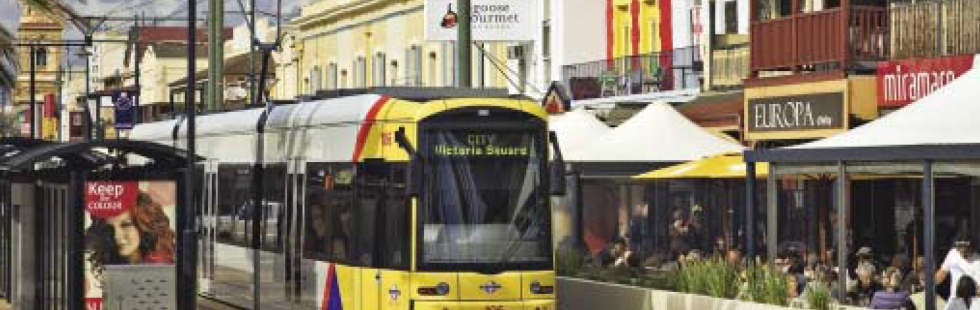
In their introduction, Clive Forster and Stephen Hamnett provide a snapshot of the current state of Australian cities in relation to urban growth, housing, transport, city economies, residential differentiation and social exclusion, together with an overview of Australian city planning policies. Next, Pauline McGuirk presents a synoptic view of contemporary challenges to the governance of Australian cities. Gavin Wood et al. then examine the Melbourne 2030 metropolitan strategy and the potential conflict between aiming to concentrate development around rail stations in ‘Principal Activity Centres’ (PACs), while also ensuring that lower-income households have access to affordable housing in these centres. The focus for Bill Mitchell et al. is the impact on low- and moderate-income workers of declining housing affordability in inner-city regions. Rowland Atkinson and Hazel Easthope examine the role of universities and their staff and students within broader strategic policies to promote both the liveability of cities and their creative milieux. Raymond Bunker suggests that the recent proliferation of economic, infrastructure and metropolitan strategic plans raises concerns about how readily these can be aligned and integrated. Patrick Troy and Bill Randolph propose a number of radical approaches to dealing with Sydney’s domestic water supply and the current crisis in its provision. Garry Glazebrook and Peter Rickwood examine the implications of peak oil and global warming for urban passenger transport in Sydney. And finally, Peter Phibbs provides a case study of Sydney’s cross city tunnel which, on most assessments, has been a fairly spectacular failure as a Public Private Partnership (PPP).
Contents
-
The State of Australian Cities: An Overview
Clive Forster and Stephen Hamnett -
Building the Capacity to Govern the Australian Metropolis
Pauline Mcguirk -
Community Mix, Affordable Housing and Metropolitan Planning Strategy in Melbourne
Gavin Wood, Christian Nygaard, Mike Berry and Elizabeth Taylor -
The Occupational Dimensions of Local Labour Markets in Australian Cities
Bill Mitchell, Anthea Bill and Martin Watts -
The Creative Class in Utero? The Australian City, the Creative Economy and the Role of Higher Education
Rowland Atkinson and Hazel Easthope -
A Plenitude, Plethora or Plague of Plans?
Raymond Bunker -
A New Approach to Sydney’s Domestic Water Supply Problem
Patrick Troy and Bill Randolph -
Options for Reducing Transport Fuel Consumption and Greenhouse Emissions for Sydney
Garry Glazebrook and Peter Rickwood -
Driving Alone: Sydney’s Cross-City Tunnel
Peter Phibbs - Publication Reviews
China, cities
The Transition of Chinese Cities
About this issue
Issue number
For more info download the flyer
Format: PDF 108791KB
Summary

08 Apr 2014
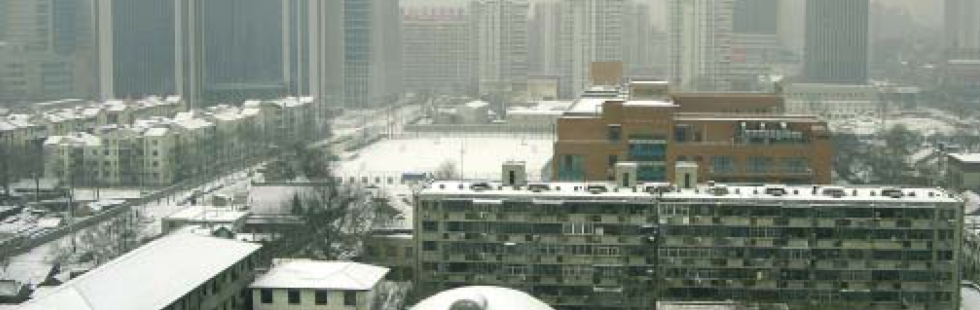
Spatial form and spatial restructuring are key concerns of all the papers in this issue: at the macro-scale, the transformation of metropolitan structure; at the intra-urban level, the configuration and transition of social space; and at a finer scale, the architectural representation of mega-projects. Following the editors’ introduction three papers consider the transition of governance in Chinese cities. The next two papers describe changes in the built environment, namely spatial restructuring and the transformation of city-regions. Then two papers deal with social space and the changing living environment of various social groups. Finally, two papers focus on the representation of the built environment and the implications of urban form for sustainability.
As the editors conclude, while the papers here illustrate profound market re-orientation in China, they do not suggest a definitive trajectory towards the retreat of the state. In fact, Chinese cities depict a very complex picture of re-orientation towards the market while strengthening state regulation in urban processes. It will be interesting to see how the Chinese built environment evolves in the era of neoliberalization.
Contents
-
The Transition of Chinese Cities
Fulong Wu and Duanfang Lu -
Designing to Govern: Space and Power in Two Wuhan Communities
David Bray -
Regional Cooperation in the Pan-Pearl River Delta: A Formulaic Aspiration or a New Imagination?
Anthony G.O. Yeh and Xu Jiang -
Kunshan Model: Learning from Taiwanese Investors
Shiuh-shen Chien and Litao Zhao -
Spatial Restructuring in Urban China amid Globalization and Economic Reform: The Case of Guangzhou
Lachang Lu and Linda Mccarthy -
From Suburbia to Post-Suburbia in China? Aspects of the Transformation of the Beijing and Shanghai Global City Regions
Fulong Wu and Nicholas Phelps -
From Homogenous to Heterogeneous: The Transformation of Beijing’s Socio-Spatial Structure
Jian Feng, Fulong Wu and John Logan -
Rural Migrants, Urban Migrants and Local Workers in Shanghai: Segmented or Competitive Labour Markets?
Yu Chen and Caroline Hoy -
Architecture as Branding: Mega Project Developments in Beijing
Xuefei Ren -
Shanghai’s Rapid Urbanization: How Sustainable?
Rebecca L.H. Chiu - Publication Review
rail, Europe
Railways in Europe: A New Era?
About this issue
Issue number
For more info download the flyer
Format: PDF 161274KB
Summary

08 Apr 2014
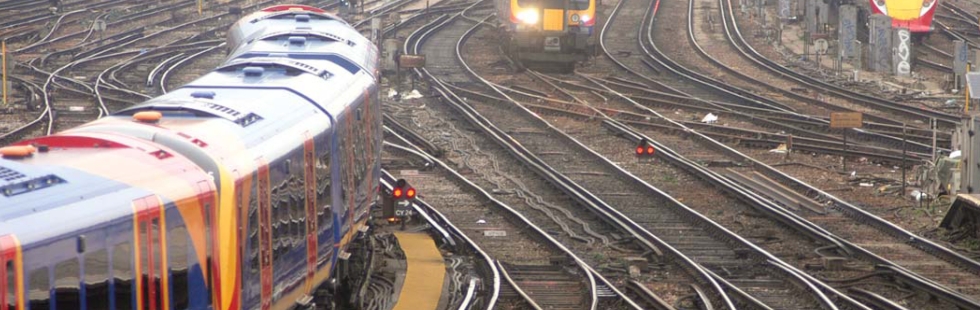
This issue provides a snapshot of European rail at the start of 2009, while detecting the main changes which took place over the last two decades. It then examines the scope for improving the position of passenger and freight railways in European transport and the role that railways can play in delivering current European transport policies. In the current transportation policy arena the challenges for European railways are enormous but so are the opportunities, both of these are highlighted in this special issue, the papers each examining different perspectives.
Contents
-
The Prospects for European Railways: Is the Second Railway Age Still Here or Yet to Begin?
Moshe Givoni and Torben Holvad -
Trends in European Railways over the Last Two Decades
John Preston -
Review of Railway Policy Reforms in Europe
Torben Holvad -
Rail Privatization and Competitive Tendering in Europe
Gunnar Alexandersson -
Magic Carpets and Seamless Webs: Opportunities and Constraints for High-Speed Trains in Europe
Peter Hall -
Are Railways ‘Climate Friendly’?
Moshe Givoni, Christian Brand and Paul Watkiss -
Opening the Market in the Rail Freight Sector
Stane Božičnik -
The Impact of Railway Station Development on Urban Dynamics: A Review of the Amsterdam South Axis Project
Frank Bruinsma -
Improving the Quality of the Door-to-Door Rail Journey: A Customer-Oriented Approach
Martij N Brons and Piet Rietveld -
East European Rail: The State of the Network
Katalin Tánczos and György Bessenyei - Publication Reviews

knowledge, creative economy, city
Can We Plan the Creative Knowledge City?
About this issue
Issue number
For more info download the flyer
Format: PDF 179653KB
Summary

08 Apr 2014
Reflecting the differing approaches across Western and Eastern Europe, the contributors to this issue of Built Environment explore the pathways towards creative and/or knowledge cities and discuss the implications for such cities in terms of social inclusion and planning policies – issues which are of critical importance in the face of world economic recession.
Content
-
Can We Plan the Creative Knowledge City? Perspectives from Western and Eastern Europe
Caroline Chapain and Peter Lee -
Rethinking the Knowledge-Based Economy
Chris Collinge and Adreene Staines -
Creative and Knowledge Cities: Development Paths and Policies from a European Perspective
Sako Musterd and Olga Gritsai -
Becoming a Creative City: The Role of Policy in the Case of Sofi a
Evgenii Dainov -
Becoming a Knowledge City: The Example of Toulouse
Elisabeth Peyroux, Michel Grossett i and Denis Eckert -
The Emergence of the Helsinki Metropolitan Area as an International Hub of the Knowledge Industries
Mari Vaatt Ovaara -
The Barcelona Metropolitan Region: From Non-Existence to Fame
Montserrat Pareja-Eastaway -
Creative Cities in England: Researching Realities and Images
Caroline Chapain and Roberta Comunian -
‘Complexcities’: Locational Choices of Creative Knowledge Workers
Julie Brown and Michał Męczyński -
Knowledge-Based Economy and Related Educational Issues: The Case of Birmingham
John Gibney, Alex Burfi tt and Alan Murie -
The Creative Economy and Social Sustainability: Planning for Opportunity and Growth
Peter Lee, Alex Burfi tt and Andrew Tice -
Deepening Social Divisions and the Discourse of Knowledge and Creativity across the Cities of Europe
Chris Collinge and Sako Musterd
safety, crime, design
Security versus Safety: A New Look
About this issue
Issue number
For more info download the flyer
Format: PDF 140229KB
Summary

08 Apr 2014
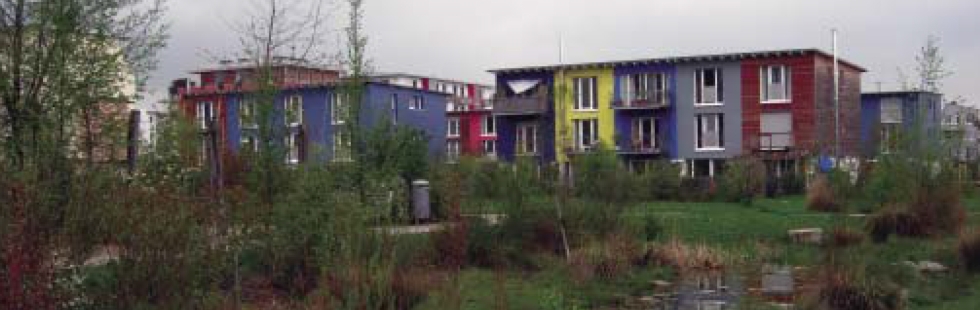
Sustainable communities are those which are safe and secure, and where people want to live. Minimizing carbon emissions is crucial, but not at the expense of preventing crime and the fear of crime. In this issue of Built Environment Rachel Armitage and Lorraine Gamman and their contributors introduce the issues of sustainability and crime reduction and ask whether there are tensions between the aims of the two agendas
– sustainability and security – or can the two be mutually reinforcing.
Contents
-
Security via Sustainability: A New Look
Rachel Armitage, University of Huddersfield and Lorraine Gamman, Central Saint Martins College of Art and Design, London -
An Overarching Framework for Sustainability
Deborah Fox, Surrey County Council -
Reconciling Security with Sustainability: The Challenge for Eco-Homes
Rachel Armitage and Leanne Monchuk, University of Huddersfield -
Crime Prevention, the Planning System, and Sustainable Development: Addressing Policy Challenges in English Practice
Ted Kitchen, Sheffield Hallam University -
Accessibility, Urban Design and the Whole Journey Environment
Graeme Evans, London Metropolitan University -
Manipulating Permeability as a Process for Controlling Crime: Balancing Security and Sustainability in Local Contexts
Paul Cozens and Terence Love, Curtin University, Perth -
SafeGrowth: Moving Forward in Neighbourhood Development
Gregory Saville, Alternation Consulting and University of Calgary -
Less is More: What Design Against Crime Can Contribute to Sustainability
Lorraine Gamman and Adam Thorpe, Central Saint Martins College of Art and Design

climate change, environment, spatial planning
Climate Change, Flood Risk and Spatial Planning
About this issue
Issue number
For more info download the flyer
Format: PDF 163592KB
Summary

08 Apr 2014
The combination of climate change and increasing flood risks poses new challenges and new conditions for spatial planning in both urban and rural areas. Concentrating on delta areas, this issue examines the effects of rising water levels (sea, lake and river) and discusses a broad range of adaptive measures available to mitigate these effects.
Contents
-
Climate Change, Flood Risk and Spatial Planning
Hugo Priemus and Piet Rietveld -
Reinventing the Dutch Delta: Complexity and Conflicts
Han Meyer -
Adaptation to Climate Change: A Framework for Analysis with Examples from the Netherlands
Pier Vellinga, Natasha Marinova and Jantsje M. van Loon-Steensma -
The Battle of Tokyo and Dhaka against Floods
Bianca Stalenberg and Han Vrijling -
Evaluating Local Flood Mitigation Strategies in Texas and Florida
Samuel D. Brody, Sarah P. Bernhardt, Sammy Zahran and Jung Eun Kang -
Planning Policy, Sustainable Drainage and Surface Water Management: A Case Study of Greater Manchester
Iain White and Alexandra Alarcon -
Clumsy Floodplains and the Law: Towards a Responsive Land Policy for Extreme Floods
Thomas Hartmann -
Rural Solutions for Threats to Urban Areas: The Contest over Calamity Polders
Dik Roth and Jeroen Warner -
Floods and Residential Property Values: A Hedonic Price Analysis for the Netherlands
Vanessa E. Daniel, Raymond J.G.M. Florax and Piet Rietveld -
Water in Residential Environments
Tom Kauko, Roland Goetgeluk and Hugo Priemus

high density, mixed land use
The Compact City Revisited
About this issue
Issue number
For more info download the flyer
Format: PDF 148557KB
Summary

08 Apr 2014
Advocates of the compact city highlight the benefits of its relatively high density and mixed land use: an urban form which encourages walking and cycling, provides social and cultural vitality, with facilities in easy reach of residents and supports local businesses, as there is a larger population to serve. But is the compact city a relevant concept in the predominantly urban twenty-first century? This is an underlying question which contributors to this issue address from a number of different perspectives.
Contents
-
Revisiting the Compact City
Nicola Dempsey -
High Urban Densities in Developing Countries: A Sustainable Solution?
Seema Dave -
Is there Room for Privacy in the Compact City?
Morag Lindsay, Katie Williams and Carol Dair -
Mixed Use Trade-offs: How to Live and Work in a ‘Compact City’ Neighbourhood
Jo Foord -
Designing a Liveable Compact City: Physical Forms of City and Social life in Urban Neighbourhoods
Shibu Raman -
Beyond Greenfield and Brownfield: The Challenge of Regenerating Australia’s Greyfi eld Suburbs
Peter W. Newton -
Adapting to Climate Change in the Compact City: The Suburban Challenge
Katie Williams, Jennifer L.R. Joynt and Diane Hopkins -
The Future of the Compact City
Nicola Dempsey and Mike Jenks
Arab Mega-Projects
About this issue
Issue number
For more info download the flyer
Format: PDF 152561KB
Summary

08 Apr 2014
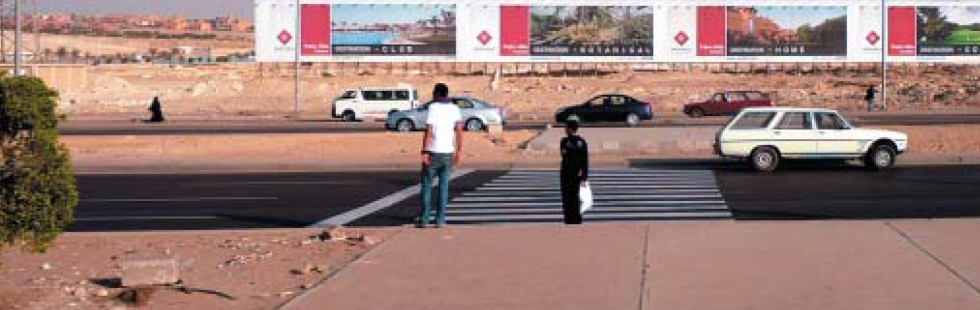
Mega-projects are at the core of contemporary Arab town planning, and the papers in this issue of Built Environment illustrate the primacy of the urban project in the planning of large cities in the Arab World over the last twenty years. That said, is there an ‘Arab’ way of creating big projects? Can we highlight Arab specificities in the manner of implementation of such urban actions, or indeed within the eight countries – Mauritania, Morocco, Algeria, Tunisia, Egypt, Sudan, Lebanon and Syria – discussed by the contributors to this issue?
Contents
-
Arab Mega-Projects: Between the Dubai Effect, Global Crisis, Social Mobilization and a Sustainable Shift
Pierre-Arnaud Barthel -
Urban Highways as an Embodiment of Mega and Elite Projects: A New Realm of Conflicts and Claims in Three Middle Eastern Capital Cities
Agnès Deboulet -
Property Investments and Master Projects in Damascus: Urban and Town-Planning Metamorphosis
Valérie Clerc and Armand Hurault -
Tanger-Med and Casa-Marina, Prestige Projects in Morocco: New Capitalist Frameworks and Local Context
Pierre-Arnaud Barthel and Sabine Planel -
A Glimpse of Dubai in Khartoum and Nouakchott : Prestige Urban Projects on the Margins of the Arab World
Armelle Choplin and Alice Franck -
The Development of the Bay of Algiers: Rethinking the City through Contemporary Paradigms
Madani Safar Zitoun -
Major Urban Projects and the People Affected: The Case of Casablanca’s Avenue Royale
Isabelle Berry-Chikhaoui -
Reactions ‘From Below’ to Big Urban Projects: the Case of Rabat
Hicham Mouloudi -
Exception as the Rule: High-End Developments in Neoliberal Beirut
Marieke Krij nen and Mona Fawaz